Visual Editor for Petri Nets
One abstraction for state machines, resource flows, game mechanics, and token standards. Build models you can simulate, analyze, and generate code from.
Example Models
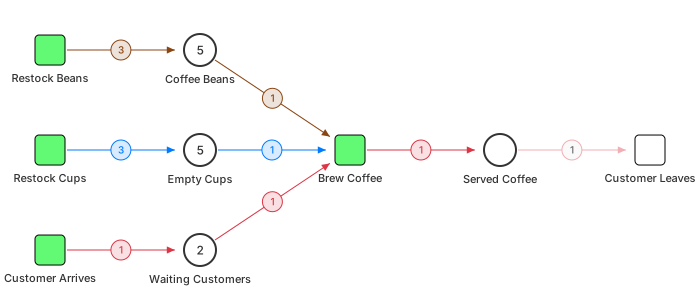
Coffee Shop
Weighted arcs encode recipes, conservation laws guarantee you never oversell a latte.
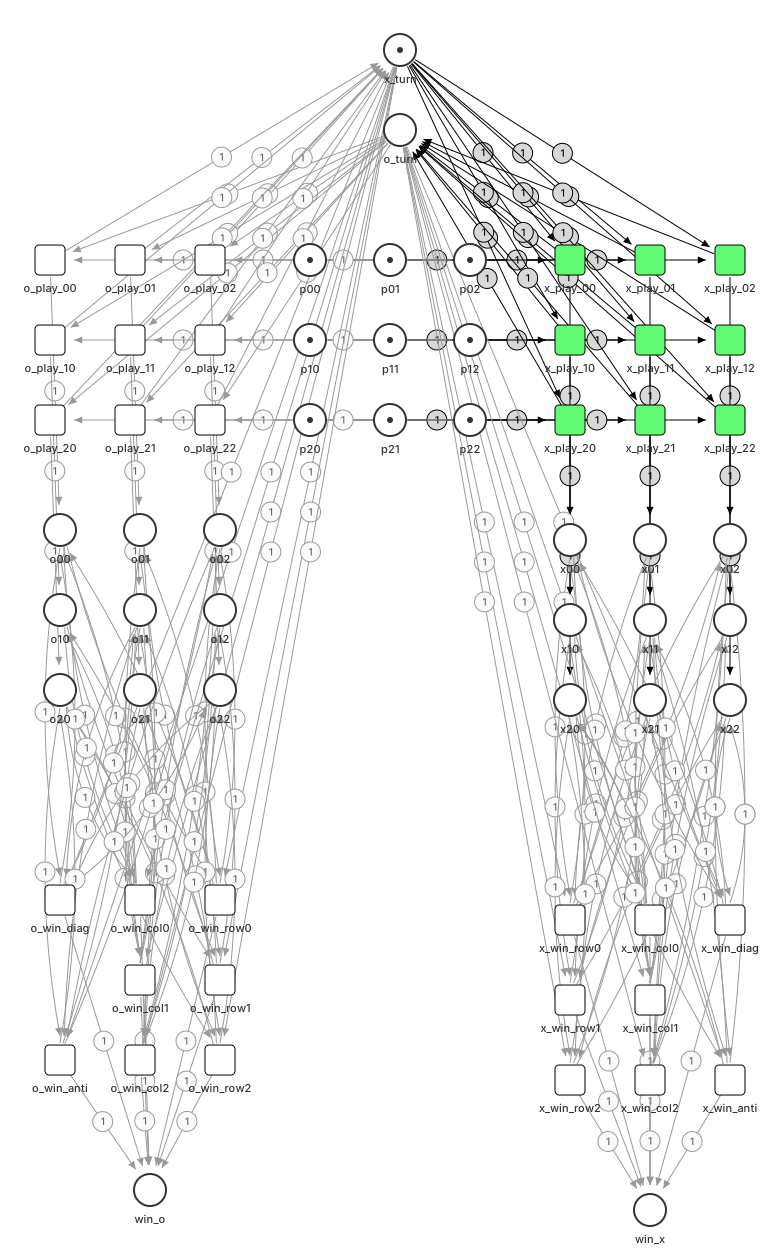
Tic-Tac-Toe
Every board position is a place. ODE heatmaps reveal optimal play from network topology alone.
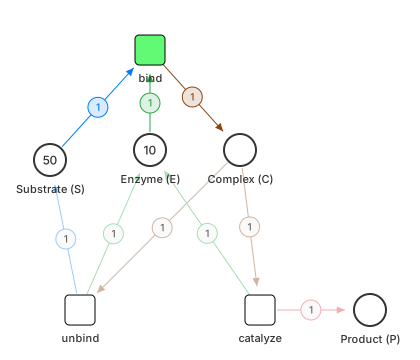
Enzyme Kinetics
Four places, three transitions — mass-action kinetics produce Michaelis-Menten curves automatically.
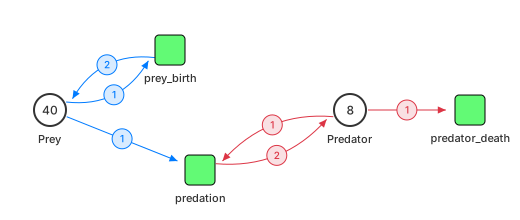
Predator-Prey
Lotka-Volterra dynamics — two species, three reactions, and the ODE solver draws the phase portrait.
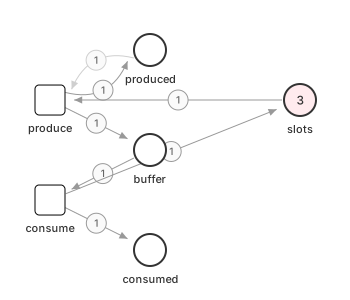
Producer-Consumer
Bounded buffer concurrency — capacity constraints prevent overflow, token counts prove correctness.

USDC Bridge
Cross-chain token flow — IBC to Noble, CCTP burn-and-mint to Base, all as one net.
Draw → Generate → Prove
One model flows through the entire stack.
Draw
Build state machines visually. Places, transitions, arcs — the model is a directed graph stored as JSON-LD with content-addressed identity.
pflow.xyzGenerate
AI constrained by the model produces correct code. The topology defines what's valid — the LLM fills in the implementation. Not prompting. Specifying.
pilot.pflow.xyz →Prove
ZK circuits verify every transition is valid without revealing state. Groth16 proofs from net topology — the model becomes its own audit trail.
Read about ZK →More from the ecosystem
The same model, a different question.
Places hold tokens. Transitions move them. Arcs define the rules. From coffee shops to poker games to blockchain bridges — the same formal structure, the same tools, the same proofs.
Read the book →